The Link Between Material Handling Ergonomics and Facility
Key Highlights
- Deferred maintenance leads to increased physical strain on operators, causing injuries, fatigue and higher turnover rates.
- Poorly maintained equipment requires more force and effort, contributing to chronic pain and reducing overall productivity.
- Implementing daily inspections and timely repairs can significantly improve ergonomic conditions and operational efficiency.
- Maintaining equipment not only prevents costly failures but also supports worker health, morale and long-term retention.
- A proactive, maintenance-first approach creates a safer, more sustainable work environment that enhances throughput and workforce stability.
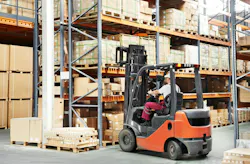
In physically demanding industries, ergonomics is essential for health and safety. While management often focuses on lifting techniques, a bigger threat may be lurking in their vehicle maintenance logs. Deferred maintenance creates harsh working conditions that sabotage throughput, which is why the ergonomics of material handling equipment is so important.
The Hidden Cost of Poor Ergonomics
Poor material handling ergonomics carries financial impacts well understood across the supply chain. Workers' compensation claims pile up, absenteeism rises and turnover rates climb. These costs compound quickly when operators work in physically demanding conditions without adequate support.
Overexertion remains a persistent challenge in warehouses and distribution centers. It ranks as the second most common injury type, contributing to lost workdays and reduced operational efficiency. When staff push through physical discomfort, the damage accumulates over time. Manageable fatigue evolves into chronic strain that eventually forces them off the floor.
Eventually, a compensation claim forces an employer to address what they should have prevented months earlier. By that point, they have already absorbed the costs of reduced productivity, temporary staffing and claim processing.
Ergonomics Is More Than Safe Lifting
Proper lifting techniques and antifatigue mats are important for workers’ well-being. However, they address only the most visible aspects of physical strain in material handling operations. The daily repetitive strain caused by poorly maintained equipment often goes unrecognized until productivity drops or someone makes an injury claim.
Employees spend entire shifts aboard forklifts and other material handling vehicles. When that equipment isn't functioning optimally, every movement requires additional physical compensation.
During a typical shift at a high-volume distribution center, a forklift operator might make hundreds of steering corrections. When a worn steering system demands an extra 5 pounds of force per turn, they’re forced to generate thousands of pounds of additional force per shift.
Even a poorly padded seat can have far-reaching consequences. Failed seat suspension turns every floor imperfection into a jolt transmitted directly through the operator's spine. Given that approximately 40% of truck drivers suffer from chronic back problems, this issue is often overlooked.
The impact of strain accumulates quickly. What starts as mild discomfort in the shoulders and forearms progresses to chronic pain. The cumulative physical toll is considerable, yet it often goes unaddressed until something or someone breaks down.
Deferred Maintenance Sabotages UPH
Deferring maintenance on capital equipment like forklifts creates technical debt that increases the likelihood of sudden equipment failure. The financial argument for preventive maintenance is straightforward. What gets overlooked is how this creates a physically punishing environment.
The ergonomics of material handling equipment deteriorate immediately when vehicles aren't maintained. For instance, tire wear and deformation affect stability and load balance, forcing drivers to work harder to maintain control, especially under load. They compensate by gripping the steering wheel more tightly and making more frequent corrections.
Hydraulic system degradation creates similar problems. When lift and tilt functions respond sluggishly, operators compensate by repositioning loads multiple times instead of once. Each maneuver requires additional time and effort. An extra few seconds per lift cycle add up quickly, destroying throughput targets while exhausting the workforce.
Vibrations transform smooth operation into a constant physical challenge. Workers experience whole-body vibrations transmitted through the seat and steering column. Muscle tension increases as they brace against it. This happens while they're still expected to maintain the facility's target units per hour (UPH).
The long-term consequences extend well beyond a single shift's reduced output. A punishing environment accelerates morale loss and exacerbates turnover in an already competitive hiring market. A facility's reputation among potential hires suffers when word spreads about poor working conditions.
Prioritizing Maintenance and Repairs
Preventive maintenance is a core ergonomic strategy, as it keeps vehicles functioning properly while reducing warehouse operator fatigue. Instead of running vehicles until failure forces intervention, management should maintain them to preserve optimal operating characteristics.
Management should implement daily pre-shift inspections. A simple checklist covering steering responsiveness, seat comfort, hydraulic function and visibility takes mere minutes and identifies problems before they escalate. When operators report issues, leaders can establish a same-day triage process to assess severity and schedule repairs.
They should also track which vehicles receive repeated complaints. These patterns reveal systemic maintenance gaps. A forklift might perform flawlessly until operating conditions or usage patterns change.
When organizations track operator comfort alongside maintenance records, the connection between material handling ergonomics and fleet upkeep becomes undeniable. Facilities implementing operator-informed maintenance protocols can see improvements in both equipment reliability and workforce satisfaction.
Boosting Throughput and Retention
When staff work with well-maintained equipment, they can sustain higher productivity levels throughout their shifts. Physical strain remains, but it stays within manageable parameters. Warehouse operator fatigue reduces considerably rather than consistently accumulating.
Retention benefits compound over time. Throughput metrics stabilize because employees maintain consistent performance from hour one through hour eight. Moreover, those who aren't battling poorly maintained equipment view their positions as sustainable long-term careers rather than temporary stops.
Training investments pay larger dividends when experienced operators stay rather than cycling through to less-demanding environments. Someone with years of experience tends to move more efficiently than a new hire. Losing that institutional knowledge to preventable ergonomic problems represents a significant hidden cost.
Ultimately, recognizing the link between equipment maintenance and ergonomics creates a more resilient, productive workforce. Also, the facility becomes known as a place where management understands the real demands of material handling work and takes action to support operator well-being. That reputation translates into a competitive advantage.
Integrate Material Handling Ergonomics
A maintenance-first approach to material handling equipment ergonomics leads to efficiency gains and warehouse operator fatigue reduction. This investment protects UPH targets while reducing the turnover that disrupts operational continuity. The ergonomic benefits materialize immediately, while the financial gains accumulate over time.
About the Author
 Emily Newton
Emily Newton
Emily Newton has eight years of creating logistics and supply chain articles under her belt. She loves helping people stay informed about industry trends. Her work in Supply Chain Connect, Global Trade Magazine and Parcel, showcases her ability to identify newsworthy stories. When Emily isn't writing, she enjoys building lego sets with her husband.