Is Poor Facility Insulation Destroying Your Supply Chain Margins?
Key Highlights
- Poor insulation increases energy costs by forcing HVAC systems to run longer, raising operational expenses across distribution centers.
- Temperature instability caused by inadequate insulation can lead to product spoilage, especially in food and pharmaceutical storage, impacting profitability.
- Degraded insulation accelerates equipment wear, resulting in higher maintenance costs and reduced lifespan of HVAC components.
- Treating the building envelope as an integrated system enhances temperature stability and reduces strain on mechanical systems.
- Energy codes like IECC 2015 and ASHRAE 90.1-2013 emphasize the importance of air barriers and insulation for operational efficiency.
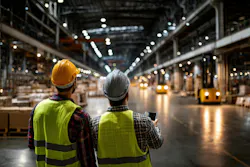
As energy costs increase and performance requirements tighten, supply chain leaders face the challenge of protecting margins. One thing that is frequently ignored is the facility itself. If its thermal performance is not well controlled, it can increase operational costs. By treating building insulation as part of the infrastructure plan, businesses can stabilize conditions inside the warehouse and restore efficiency that would otherwise continue to be lost to profitability.
The Financial Impact of an Inefficient Building
Facility inefficiency rarely shows up as a single line item. Instead, its effects can increase operating costs across the entire distribution. When insulation performance falls short, the financial impact often appears in the following ways.
Increased Energy Costs
Poor insulation in warehouses means HVAC systems have to run longer and harder to maintain the internal environment, especially in temperature-sensitive environments. This increased runtime contributes to the facility's electricity load. It can rapidly increase the operational costs of large distribution areas where the energy cost alone averages about $2 to $3 per square foot in many warehouses. Poor thermal performance transforms a controlled expense of infrastructure into a permanent loss of energy efficiency for the distribution center over time.
Product Loss and Spoilage
Poorly insulated buildings can cause temperature instability, ruining goods long before problems are seen at the shipment level. Even minor changes in storage settings raise the risk of spoilage, packaging deterioration and reduced shelf life, especially in food and pharmaceutical supply chains.
Research suggests that between 7% and 15% of food waste occurs during transportation due to refrigeration failures, and similar temperature fluctuations in storage warehouses might pose similar hazards. Better insulation performance contributes to stabilizing conditions across the temperature-controlled warehouse infrastructure and prevents unnecessary product loss, which impacts supply chain profitability.
Accelerated Equipment Wear
When insulation performance degrades, HVAC systems must cycle more frequently to maintain stable interior conditions, placing more mechanical pressure on compressors, fans and controllers.
Heating and cooling systems of commercial buildings account for around 40% of total energy use. Therefore, small increases in runtime can lead to faster wear and tear on components and higher maintenance costs over time. This increased stress reduces equipment life and increases the risk of unscheduled repairs, making building envelope inefficiencies an ongoing infrastructure cost.
Understanding High-Performance Warehouse Infrastructure
Today’s warehouse performance depends as much on the building envelope as it does on automation, layout strategy or material-handling equipment. Facilities that consider insulation as part of a comprehensive infrastructure system are better able to stabilize operating conditions and control long-term expenses.
The “Building Envelope” Concept
In high-performance buildings, facilities are progressively treating the roof, walls, floors, insulation layers and air barriers as one integrated system. Together, this strategy helps maintain more consistent interior conditions and reduce uncontrolled heat transfer and air leakage through the building envelope.
Improving envelope performance enhances the reliability of temperature-controlled warehouse infrastructure. It minimizes the strain on mechanical systems that would otherwise have to compensate for thermal instability in temperature-sensitive processes.
The Role of Modern Energy Codes
Changes in energy laws have occurred to recognize the significant influence of building envelope performance on operational efficiency in large complexes. For instance, air barriers are now required by key energy standards such as the IECC 2015 and ASHRAE 90.1-2013.
This reiterates that regulating air movement within the structure is a recognized performance criterion. Logistics leaders who facilitate these expectations can reduce needless energy loss while enabling more stable indoor environments throughout distribution operations.
Building the Business Case for an Upgrade
One of the most predictable infrastructure enhancements logistics directors can assess is building insulation performance, as the return is directly tied to verifiable savings in energy use and reduced equipment strain. In many facilities, retrofit insulation projects offer relatively short payback periods by reducing HVAC runtime and stabilizing indoor operating conditions across broad warehouse footprints.
As such, expenditures to improve the building envelope often yield longer-term gains in energy efficiency for distribution centers, with the added benefit of minimizing maintenance costs and the risk of temperature-related inventory damage. Industrial firms often find similar performance advantages when they revisit the role of permanent infrastructure in enabling operations. Boeing, for example, cut the time needed to produce an aircraft from 16 days to only four by structuring the workflow around the physical infrastructure rather than treating it as a static constraint.
This example shows how infrastructure choices can affect operational speed and cost performance in ways that are not always clear at first. Supply chain leaders can apply that same attitude to warehouse insulation renovations, uncovering efficiency advantages beyond utility savings that directly contribute to stronger margin protection.
An Action Plan for Evaluating Your Facility
Before committing to a full retrofit, logistics leaders can take several steps to understand how insulation performance is affecting daily operations.
1. Start With Internal Data
The evaluation process begins with information the organization already has available. Reviewing the last few years of utility bills can reveal seasonal spikes, unexplained increases in energy use or patterns that suggest the building envelope is forcing HVAC systems to work harder than expected. Maintenance records can also provide further insights by identifying whether heating and cooling equipment is cycling frequently or requiring more repairs than comparable facilities.
2. Conduct a Preliminary Walk-Through
A simple walk-through of a facility can identify early warning signs of insulation performance deficiencies. Drafts near loading dock doors, moisture, or stains along roofing and walls can all be indicators of uncontrolled air circulation through the structure. Feedback from the floor is useful at this point, too, because operations teams typically see hot and cold spots repeating before they ever appear in official performance reporting.
3. Engage in a Professional Energy Audit
A certified energy audit is the best way to get a clear picture of how the building envelope is impacting operational costs. The auditors can use tools such as thermal imaging and airflow testing to pinpoint specific areas where insulation performance is degrading and quantify the impact of those conditions on energy demand. These types of studies help facility leaders select improvements based on measurable benefits rather than assumptions.
4. Develop a Phased Retrofit Strategy
After identifying issue areas, firms can then prioritize renovations that give the strongest returns first. By addressing the largest contributors to heat loss or air infiltration first, facilities can quickly achieve stable conditions while amortizing the capital investment in manageable phases. This enables continuous increases in efficiency without interruption to the distribution operations that have already started.
Turning Infrastructure into a Margin Advantage
Facility insulation is generally considered a background construction element, but it is a direct player in energy performance. Evaluating building envelope performance is an opportunity for logistics leaders to stabilize operational conditions and recapture efficiency that would otherwise continue to erode margins. A planned approach to insulation modifications can also make the warehouse itself a stronger contributor to long-term supply chain success.
About the Author

Emily Newton
Emily Newton has eight years of creating logistics and supply chain articles under her belt. She loves helping people stay informed about industry trends. Her work in Supply Chain Connect, Global Trade Magazine and Parcel, showcases her ability to identify newsworthy stories. When Emily isn't writing, she enjoys building lego sets with her husband.