Extreme Transit Environments Are Destroying Your Inventory Traceability Data
Key Highlights
- Supply chain visibility is enhanced by real-time data, but physical vulnerabilities like thermal stress and corrosion still pose significant risks to tracking accuracy.
- Temperature-sensitive goods require specialized packaging and sensors to detect and alert handlers about suboptimal conditions, reducing spoilage and inventory inaccuracies.
- Extreme weather events and environmental factors, such as ocean salt corrosion, can disrupt tracking systems, necessitating proactive risk management and protective measures.
- Automation and tamper-proof labels help manage high parcel volumes and prevent damage or tampering, but they must be resilient to environmental stresses to remain effective.
- Strategic precautions, including protective coatings and contingency planning, are essential for maintaining traceability amid unpredictable transit challenges.
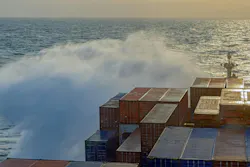
The increased availability of supply chain traceability data has significantly improved safety, efficiency and overall operations for supply chain professionals responsible for getting goods to their destinations on time. Many interfaces tell users exactly when employees scan parcels upon arrival or immediately notify them of unexpected delays. These are undoubtedly positive developments, but they do not solve all inventory visibility blind spots.
Tracking systems remain subject to physical vulnerabilities that can wreak havoc despite professionals' best efforts to mitigate them.
Thermal Stresses Can Ruin Goods or Disrupt Travel
Supply chain professionals handling temperature-sensitive goods must rely on options such as specialized packaging and sensors that provide real-time alerts of products exposed to suboptimal conditions. Related research also indicates that heat stress affecting supply chains causes direct and indirect losses, especially in manufacturing-heavy countries.
The potential effects on tracking system data vary depending on the severity and nature of the consequences. If a product melts inside its packaging, the moisture on the parcel and its label may smear the barcode, making it unreadable. Similarly, if a company lacks a reliable way to estimate the number of goods ruined by thermal stress, that oversight may lead to inventory-related inaccuracies.
Supply chain professionals should also gather data indicating whether undesirable thermal events occurred within the supply chain or after products reached their destinations. Those granular details help them determine what went wrong and why. If extreme transit environments prevent them from dependably gathering or accessing that information, it will be difficult or impossible for them to take corrective action.
Sometimes, extreme weather events temporarily close transit hubs. At London's Luton Airport in 2002, unusually hot temperatures caused the asphalt on a patched section of the runway to lift when the bond failed. The issue affected only 0.2% of the whole surface area. Even so, the required repair closed the runway for nearly two hours.
That was a rare event, but repeat occurrences could become more likely due to climate change. Leaders who hope to minimize inventory visibility blind spots should develop reliable ways to track events beyond their control and take action when necessary and possible.
Reducing Label Destruction and Tampering
Modern conveniences such as same-day shipping and online shopping have led to higher overall parcel volumes that were unheard of only a couple of decades ago. This change stresses already stretched supply chains and forces managers to implement reliable ways for workers to process higher volumes while retaining high accuracy rates. This multifaceted situation has caused many companies to transition to automated systems that process goods in transit.
An increased reliance on automation has raised the risk that labels and parcels get caught in equipment and that humans fail to notice the problem until significant damage occurs. Extreme parcel volumes often make it impossible to continue tracking if machinery-related destruction makes labels unreadable.
Similarly, rising volumes require companies to hire handlers more often. Rapid onboarding and lenient background checks create conditions for package tampering, especially affecting high-value or in-demand goods.
Tamper-proof labels increase customer confidence, support traceability and may even assist a company in complying with regulatory mandates. For example, the United States Food and Drug Administration requires tamper-proof labels for medications. Other cases occur in which mishandled parcels appear tampered with, even if no one acted maliciously. Those cases can still pose consumer safety risks because exposure to air can change some medicines.
Working with a well-respected label provider is a practical way to improve supply chain traceability data. That is especially true if decision-makers determine their most frequent challenges—whether rough handling, moisture or extreme temperatures made the labeled products untraceable. Confirming the cause enables company representatives to suggest different types of adhesives, inks, materials and other factors to increase label resiliency when exposed to known extreme transit environments.
Ocean Corrosion Causes Persistent Tracking Challenges
Although some transit extremes have manifested relatively recently due to evolving factors, it is also true that certain shipment methods invariably require taking precautions to protect goods as much as possible.
Products sent by cargo ships are good examples. Seawater contains high concentrations of dissolved salts, which can lead to significant corrosion. Depending on how this phenomenon affects the associated surfaces, it can cause thinning, holes and crevices on shipping containers.
Business leaders prioritizing speed may choose cargo flights over ships. Sending products by air eliminates the ocean corrosion risk, but it is generally the costlier of the two methods. Even supply chain professionals willing to pay the difference may find that cargo plane space fills up too quickly, especially during peak periods. Many also find it infeasible to rely solely on cargo planes, especially as they expand into new markets or distribute additional products.
The best way forward is to understand the effects of ocean-related corrosion on cargo in transit and how those challenges may make tracking less reliable. Professionals can then identify controllable trends or factors and favorably influence them to enhance supply chain traceability data. Supply chain disruptions lasting approximately one to two months occur every 3.7 years, underscoring the importance of preparedness through awareness and risk reduction.
Some companies have responded by applying corrosion-resistant coatings to vulnerable parts of container ships. This approach addresses some challenges but still requires professionals to prepare for the possibility that environmental factors may interfere with tracking efforts.
Reinforcing Supply Chain Traceability Data with Strategic Precautions
Supply chain professionals cannot always anticipate when extreme transit environments will prevent the collection of traceability data or introduce inaccuracies. However, they can do the next best thing by assuming that these adverse conditions will inevitably arise and taking appropriate preventive measures to prepare for them. They should also stay abreast of emerging difficulties and continually assess how those obstacles might disrupt future operations.
Understanding the possibilities in advance is an excellent way to find the best ways of handling them before it is too late. Leaders can also use internal data to determine the most persistent challenges. Whether they prioritize reducing label destruction or minimizing inventory visibility blind spots, identifying these particulars is the first step to solving costly and inconvenient issues.
About the Author
 Emily Newton
Emily Newton
Emily Newton has eight years of creating logistics and supply chain articles under her belt. She loves helping people stay informed about industry trends. Her work in Supply Chain Connect, Global Trade Magazine and Parcel, showcases her ability to identify newsworthy stories. When Emily isn't writing, she enjoys building lego sets with her husband.