Are Smart Trailer Systems Becoming the New Backbone of Supply Chain Reliability?
Key Highlights
- Smart trailers incorporate sensors, GPS, geofencing and more to improve visibility, safety and cargo monitoring, enabling proactive decision-making.
- Emerging innovations like smart kingpins and AI-driven cargo scanning promise significant gains in fuel efficiency and cargo handling accuracy.
- Faster troubleshooting and predictive maintenance reduce downtime, extend equipment lifespan and lower operational costs for fleet owners.
- The adoption of smart trailer technology is driven by declining sensor costs, rising customer expectations and the need for supply chain resilience amid disruptions.
- Market projections indicate trailer telematics will reach $1.41 billion by 2030, highlighting the growing importance of digitalized trailer systems in freight management.
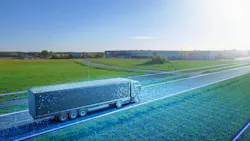
Supply chain professionals face mounting pressure to mitigate disruptions and meet demand without raising costs. The push for safer, more efficient hauling has pushed smart trailer systems into the spotlight. They are quickly becoming essential to supply chain reliability, evolving from a nice-to-have to a must-have.
The Rise of Smart Trailers in the Supply Chain
For years, digitalization efforts were concentrated within the cab. Aside from sensors and cold chain monitoring solutions, relatively few breakthrough inventions were engineered specifically for trailers. Now, supply chain leaders are realizing the value of smart trailer technology.
Hardware with sensing, data sharing, automation or intelligent analysis capabilities is embedded within smart trailers to aggregate and analyze relevant information. Knowing where each trailer is and what it is hauling increases visibility. Fleet managers can act on these insights to enhance load distribution, routing, fuel efficiency and maintenance.
Fortunately for fleet owners, digitalization has never been more accessible. An Internet of Things sensor costs just 40 cents on average. While newer or more advanced solutions tend to have a higher up-front cost, many options are surprisingly affordable.
The combination of declining sensor costs, higher customer expectations and recent supply chain disruptions has made smart trailer adoption a strategic imperative. The only question is which technologies companies should invest in.
Examples of Popular Smart Trailer Technologies
Supply chain professionals can improve safety, performance and stability by embedding smart solutions into trailers. Popular options include integrated trailer brake controllers, sensors, geofencing and GPS.
Integrated trailer brake controllers have replaced conventional aftermarket options. They are now found on virtually all trucks with a tow package. They modulate the power and timing to the brakes based on pressure and speed sensors attached to the vehicle. This enables them to send power to the trailer circuit when the driver presses the brake pedal.
These controllers improve braking efficiency by evenly distributing force. Proportional braking enhances control, reducing the risk of jackknifing and eliminating the jerky movements associated with time-delayed systems. In addition to ensuring smooth, precise stops, this technology also offers diagnostics, which can extend the service life of brake pads.
Aside from pressure and speed, sensors can check proximity, vibration and weight. Fleet owners can use them to monitor cargo, allowing them to remotely check which trailers are loaded appropriately and which are empty. If one is underloaded, they can instruct the driver to backhaul and pick up additional cargo.
Geofencing and GPS ensure drivers will follow those instructions. The former defines digital boundaries, while the latter enables precision location monitoring. This system can send alerts whenever the trailer enters or exits a geofence.
Emerging Solutions Entering Supply Chains
Smart trailer systems are quickly becoming the backbone of supply chain reliability. By improving visibility and generating operational data, they inform decision-making, reduce trailer maintenance and help preserve cargo integrity.
GPS and integrated trailer brake controllers are not the only technologies driving supply chain improvements. While investing in unproven solutions carries risk, becoming an early adopter of emerging solutions offers a unique competitive advantage.
Take traditional kingpins, for example, which connect a tractor and trailer, securing them together and allowing for articulation during turns. A smart version taps into sensor arrays to measure how hard the tractor is pulling in real time. It sends these readings to an attached motor, powered by an on-board battery pack.
This technology could increase fuel efficiency by 35% to 40% for diesel vehicles. It could add upwards of 100 miles of range to electric tractors. These gains account for the added weight of electrifying the trailer, which comes out to about 4,000 pounds. Advances in smart kingpin and electrification technologies could yield even greater improvements.
Artificial intelligence is a better-known example of emerging smart trailer technologies. It can process telematics data to enhance routing, reduce dwell times and decrease trailer wear. An AI vision system embedded into a ruggedized camera enables shifting detection and volumetric cargo scanning. Fleet owners can use it to inform decision-making or prevent cargo damage.
Smart Systems Enable Faster Troubleshooting
Faster, more accurate troubleshooting is becoming a critical competitive advantage among supply chain leaders. Truckers need to be able to identify and resolve weight distribution issues and equipment malfunctions quickly to ensure efficiency and prevent damage.
Smart trailers are quickly becoming fundamental to proactive maintenance strategies because they alert mechanics to minor issues before they worsen. They help reduce maintenance expenses and extend equipment lifespan by preventing excessive wear and tear. The faster trailers return to hauling, the sooner they can generate more revenue.
Assets spend less time in the shop when mechanics know exactly what is wrong with them. Sensor-generated data informs maintenance plans, helping teams prioritize critical issues. It also supports cost-risk analyses, allowing fleet owners to maximize revenue and minimize risk.
Are Smart Trailers a Must-Have for Fleet Owners?
Running a fleet can get expensive quickly. When diesel costs $3.76 per gallon, it costs around 54 cents per mile to run a semi-truck averaging 7 mpg. Fuel costs for a 100-mile trip total $54. Factoring in wear and tear, fleet owners pay closer to $74. When professionals multiply this by every trailer they haul, the costs add up fast.
Smart trailer systems generate a positive return on investment by improving driver and cargo safety. For instance, integrated trailer brake controllers enable proportional braking, upgrading braking efficiency for heavy loads. Whether navigating long hauls or city traffic, operational enhancements and real-time alerts provide drivers with peace of mind.
Although companies may be able to get by the old-fashioned way, investing in smart trailers is generally a sound business decision. These technologies are becoming more popular with each passing day. The growing demand for electric trailers and the desire to reduce operational costs are among the top drivers of growth.
Market research experts predict trailer telematics will reach $1.41 billion in 2030, achieving a 10.5% compound annual growth rate from 2024 to 2030. Semi-trucks are growing increasingly connected—maybe it is time for trailers to digitalize, too.
Smart Trailer Systems Will Keep Freight Moving
Managing a fleet without smart technology creates blind spots, thereby leaving shipments vulnerable to tampering and forcing companies to rely on reactive maintenance. Smart trailers keep freight moving and enhance supply chain visibility, reducing unscheduled downtime and preserving cargo integrity.
About the Author

Emily Newton
Emily Newton has eight years of creating logistics and supply chain articles under her belt. She loves helping people stay informed about industry trends. Her work in Supply Chain Connect, Global Trade Magazine and Parcel, showcases her ability to identify newsworthy stories. When Emily isn't writing, she enjoys building lego sets with her husband.