The Unseen Dangers of Integrating AI Into Physical Warehouse Systems
Key Highlights
- Physical AI technologies like autonomous robots and smart inventory systems are transforming warehouse operations, enabling real-time workflow optimization and demand forecasting.
- Small errors in AI systems can escalate rapidly, causing inventory mismanagement, shipping delays and increased operational costs if not properly safeguarded.
- Algorithmic bias from outdated data can lead to inefficient decision-making, emphasizing the need for continuous data validation and system monitoring.
- Safety risks arise from autonomous systems working alongside humans, requiring layered safeguards such as barriers, sensors and emergency protocols.
- Cybersecurity threats increase with interconnected AI systems, necessitating network segmentation, strict access controls and ongoing security monitoring.
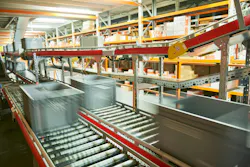
As you integrate artificial intelligence into warehouse operations through robotic systems, autonomous vehicles, predictive inventory tools and AI-driven routing, automation can help improve efficiency and address labor and demand pressures across your supply chain.
However, because physical AI interacts directly with equipment, inventory and people, mistakes can lead to operational disruptions, damaged goods, safety incidents and cybersecurity risks. For supply chain professionals, the challenge is no longer whether to adopt AI, but how to implement it responsibly with the right safeguards in place.
The Rise of Physical AI in Warehousing
Physical AI refers to AI systems that interact with and control physical equipment and processes. In warehouse environments, this includes technologies such as:
- Autonomous mobile robots
- Robotic picking and packing systems
- AI-powered conveyor systems
- Automated guided vehicles
- Smart inventory tracking systems
- AI-driven demand forecasting tied directly to warehouse execution
- Computer vision systems for quality inspection and safety monitoring
These technologies are increasingly integrated into broader supply chain operations, with AI now influencing inbound logistics, inventory allocation, labor scheduling, transportation coordination and order fulfillment. Industry forecasts also predict major advances in physical AI and robotics in 2026, particularly in warehouse automation and real-time workflow optimization.
At the same time, global AI adoption in manufacturing is projected to increase productivity by more than 40% over the next decade, accelerating automation across interconnected warehouse environments. However, as supply chains become more autonomous, organizations also face greater exposure to operational disruptions, system failures and automated decision-making risks.
How Automation Can Amplify Small Errors
One of the biggest dangers of AI-driven warehouse automation is the speed at which small mistakes can escalate. Traditional warehouse errors are often localized and corrected manually. However, AI systems operate at machine speed and scale. A flawed algorithm, an incorrect dataset or a poorly calibrated sensor can rapidly propagate errors throughout the operation.
For example, an AI inventory management system may incorrectly prioritize certain products due to biased historical demand data. If integrated with automated picking systems and replenishment workflows, the error could trigger:
- Incorrect inventory positioning
- Overstocking of low-demand products
- Stockouts of high-priority items
- Shipping delays
- Increased transportation costs
- Production interruptions downstream
Because AI systems continuously optimize based on incoming data, they can reinforce their own mistakes when safeguards are lacking. In highly automated warehouses, this can worsen operational inefficiencies and delay human intervention until disruptions become severe.
How Algorithmic Bias Creates Operational Distortions
Algorithmic bias can significantly impact warehouse operations when AI systems learn from historical data that reflects outdated demand patterns, inefficiencies or uneven conditions. This can lead to skewed decision-making across key functions.
For example, systems may over-prioritize legacy products over emerging demand, misallocate labor due to incomplete productivity data, or choose inefficient routing paths based on simulation-driven assumptions rather than real-world conditions.
These biases can gradually degrade performance while remaining difficult to detect, making continuous monitoring and data validation essential to ensure AI decisions stay aligned with actual operational realities.
Safety Risks in Human-Robot Environments
Physical AI in warehouses introduces safety risks as humans and autonomous systems increasingly work side by side. Hazards include misidentified obstacles, unexpected robotic movements, sensor failures and AI systems prioritizing efficiency over safe spacing. Because warehouse environments are highly dynamic, even advanced systems can fail in edge cases not seen during training.
According to the Occupational Safety and Health Administration, workplace robot hazards can stem from human error, unauthorized access, control system failures and mechanical or environmental conditions. These risks are often intensified by overreliance on automation, making human oversight and layered safeguards such as barriers, redundant sensors, emergency shutdown systems and audit procedures essential for safe operation.
Expanded Cybersecurity Threats with Connected Automation
As warehouse systems become more interconnected, cybersecurity risks increase significantly. AI-driven supply chain operations rely on networks of devices, sensors, robotics systems and software platforms, each of which expands the potential attack surface.
A successful cyberattack against AI-enabled warehouse infrastructure could result in operational shutdowns, inventory corruption, shipping disruptions, manipulated routing instructions, disabled robotic systems, compromised safety controls, data breaches and financial losses from delayed or misrouted orders.
In physical AI environments, these disruptions can quickly translate into real operational and safety impacts. Key safeguards include network segmentation between systems, strict access controls, continuous monitoring for anomalies, regular patching and contingency procedures for manual operations.
Over-Automation and Infrastructure Challenges
Excessive reliance on AI can reduce operational flexibility, as highly automated warehouse systems are often optimized for predictable conditions and may struggle with disruptions like demand spikes, supplier delays or inventory issues. In contrast, human workers are better equipped to adapt and make contextual decisions during unexpected events.
Common risks of over-automation include rigid scheduling systems, difficulty handling irregular workflows and operational breakdowns during connectivity outages, especially when cloud-dependent systems are involved.
At the same time, organizations often underestimate the ongoing maintenance required for physical AI, including sensor calibration, model retraining, software updates and hardware servicing. Integration with legacy systems can also create data inconsistencies and workflow fragmentation, while long-term concerns such as vendor lock-in, upgrade costs and increased energy demand for infrastructure can erode expected efficiency gains.
Deployment Planning and Risk-Aware Implementation
Successful physical AI deployment in warehouses requires structured planning. Disruptions often occur when systems are scaled too quickly without proper testing or risk assessment. Phased pilots should be used to evaluate performance under real conditions. Key considerations include:
- Pre-deployment risk assessments
- Mapping system dependencies across warehouse systems
- Defining human override and escalation protocols
- Testing edge cases and disruption scenarios
- Ensuring integration with legacy systems
Without this foundation, even advanced AI can destabilize warehouse operations.
Responsible AI Integration with Human Oversight
Effective physical AI deployment in warehouses still depends on human oversight to validate decisions, manage exceptions and intervene during unexpected situations. While automation improves efficiency, humans remain essential for ensuring safety, accountability and operational resilience.
Best practices include maintaining human-in-the-loop controls, conducting continuous system audits, testing AI under real-world and edge-case scenarios, ensuring transparent decision-making and training staff to work effectively alongside automated systems.
Building Resilient Warehouses
Physical AI can improve warehouse efficiency and supply chain performance, but automation alone is not enough to ensure long-term success. Without strong safety measures, cybersecurity protections and operational oversight, AI-driven systems can introduce risks that disrupt operations rather than optimize them.
To reduce these risks, professionals should prioritize phased deployment, continuous monitoring and human oversight to ensure warehouse systems remain flexible, secure and reliable under real-world conditions.
About the Author
 Devin Partida
Devin Partida
Contributing Writer, Grid Media Services, LLC.
Devin Partida is a manufacturing and supply chain writer. Her work has been featured on Manufacturing Tomorrow, Entrepreneur, AllBuisness and other publications. To read more from Devin, visit ReHack.com.