Using Geothermal Energy To Support Data Center Growth
Download this article in PDF format.
As the argument over whether or not to continue the massive buildout of data centers in the U.S. continues, some organizations are finding alternative means of powering up these facilities without as much negative impact on the nation’s energy grid. Geothermal energy is one area of interest because it can provide a steady source of power for facilities that operate around the clock.
What is Geothermal Energy?
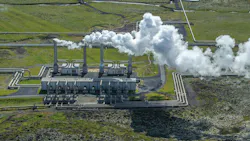
We’re all used to flicking a switch to turn on the lights using electricity generated from the grid, solar panels or a combination of the two. Geothermal energy is different. It’s literally the heat from Earth and it’s generated by reservoirs of hot water (either natural or manmade) at varying temperatures and depths below the earth’s surface.
According to the U.S. Department of Energy, wells ranging from a few feet to several miles deep can be drilled into underground reservoirs to tap steam and very hot water that can be brought to the surface for use in applications like:
- Electricity generation. Deep underground, the presence of hot rocks, fluid and permeability (the ability for that fluid to move among the rocks) offer conditions from which electricity can be generated.
- Heating and cooling. Naturally occurring underground reservoirs of hot water or the stable temperature of the subsurface can be used to heat and cool buildings. Geothermal heat pumps provide heating and cooling using the ground as a heat sink, absorbing excess heat when the above-ground temperatures are warmer, and as a heat source when above-ground temperatures are cooler.
- Direct use. Deep wells draw hot water from the subsurface to directly provide hot water to buildings, space heating or heat for industrial processes ranging from fish farming and greenhouses to drying pulp, paper, lumber and other materials.
Citing a GeoVision analysis, the DOE says there’s potential for up to 60 gigawatts of electricity-generating geothermal capacity (more than 17,000 district heating systems and up to 28 million geothermal heat pumps) by 2050. It says another analysis confirmed the potential for even more geothermal electricity-generating capacity (90 gigawatts by 2050), “if we can achieve aggressive cost reductions in enhanced geothermal systems.”
Working Behind the Scenes
Geothermal energy has been around since the dawn of time, but it’s now being viewed as a potential power source for data centers, which can consume as much electricity as tens of thousands of homes. For example, a 100-megawatt facility uses roughly as much power as 84,000 average U.S. homes. This is one reason data center developers are looking beyond traditional grid power and toward alternatives like geothermal energy.
Google is the latest hyperscaler (i.e., operators of very large networks of data centers and cloud computing infrastructure) to throw its hat into the geothermal ring. Fervo Energy recently announced a 396-megawatt (MW) power purchase agreement (PPA) with Google to enable the continued development of the Cape Station enhanced geothermal systems (EGS) GeoCluster.
The GeoCluster is expected to come online in 2028. Under the agreement, Google will purchase carbon-free energy designed to serve as a foundational building block for a potential data center in Utah. Through the PPA, Fervo will offer Google an option to expand its offtake by approximately 600 MW, for a total of nearly 1 GW, by June 2030.
Fervo says this deal unlocks new, around-the-clock electricity capacity at no cost to existing ratepayers. “This agreement reinforces that EGS is ready to power the next generation of computing infrastructure,” said Fervo CEO Tim Latimer in a press release. “As demand for reliable electricity grows, customers like Google need energy resources that can be deployed at scale, operate around the clock, and deliver where power is needed.”
More to Come
The Fervo-Google partnership began with Project Red, Fervo’s commercial pilot project in Nevada that came online in 2023. That pilot delivers power to the local grid, including Google’s data centers in the state. Fervo then signed a 115 MW PPA with Google and NV Energy in June 2024 that helped pioneer the Clean Transition Tariff.
“The next chapter of advanced power generation technology is being written in Utah,” said Google’s Lucia Tian. “This project will drive meaningful economic benefit to the local community and help catalyze long-term energy cost reductions by making enhanced geothermal more affordable and accessible.”
Expect to see more announcements like this one as companies look for new ways to power their massive data centers. The DOE says geothermal technologies offer two solutions to the challenges of meeting and managing data centers’ power and cooling demands: power generation and direct cooling.
“As a steady power generator, geothermal electricity is ideal for supporting the energy load generated by constant data center operations,” it explains, “such as that required by some AI data computing, as well as flexible computing loads like those of bitcoin mining, which can fluctuate between periods of high uptime (or regular operation) and reductions in response to market price sensitivities.”
About the Author
Avery Larkin
Contributing Editor
Avery Larkin is a freelance writer that covers trends in logistics, transportation and supply chain strategy. With a keen eye on emerging technologies and operational efficiencies, Larkin delivers practical insights for supply chain professionals navigating today’s evolving landscape.